Many community managers know how many members their community has. However, far fewer know how many people are actually reached, how many actively participate, or how the community evolves over time.
Yet these are precisely the questions that matter most. After all, a community doesn’t succeed simply because as many people as possible have signed up. It succeeds when people return regularly, interact with one another, and derive value from the network.
Anyone who manages a community professionally should therefore not focus solely on growth. Reach, activity, and engagement are just as important. Only when these metrics are considered together can you tell whether a community is truly vibrant.
In this guide, you’ll learn which community KPIs you should track regularly and why metrics like Reached Unique Users and Engaged Unique Users provide particularly valuable insights into your community’s growth.
Community KPIs: Key metrics you should track
Many community managers know how many members their community has. However, far fewer know how many people are actually reached, how many actively participate, or how the community evolves over time.
Yet these are precisely the questions that matter most. After all, a community doesn’t succeed simply because as many people as possible have signed up. It succeeds when people return regularly, interact with one another, and derive value from the network.
Anyone who manages a community professionally should therefore not focus solely on growth. Reach, activity, and engagement are just as important. Only by combining these metrics can you determine whether a community is truly vibrant or merely maintaining a large number of inactive members.
In this guide, you’ll learn which community KPIs you should track regularly and why metrics like Reached Unique Users and Engaged Unique Users provide particularly valuable insights into your community’s growth.
Why Community KPIs Say More Than Member Numbers
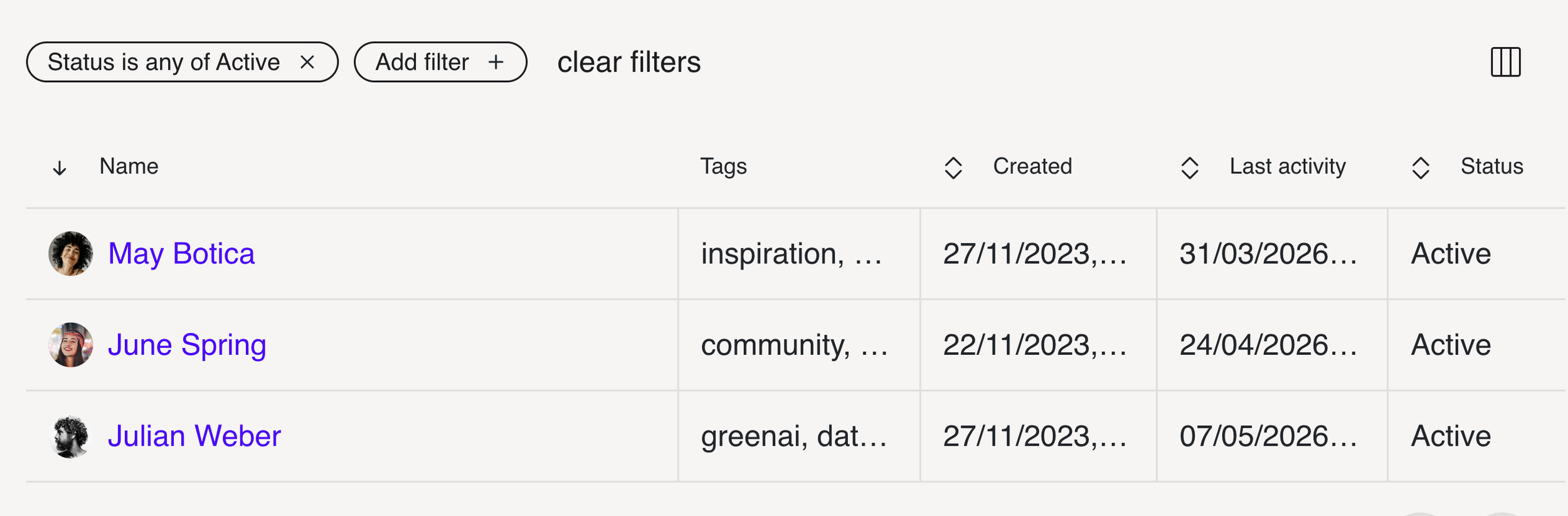
Overview of active members in coapp
Many organizations measure the success of their community based on the number of members. This is understandable; after all, this metric is easy to track and communicate. However, this often results in a distorted picture.
A community with 1,000 members can generate significantly less value than a community with 100 active members. What matters isn’t how many people have registered at some point in the past. What matters is how many people are actually being reached today and are actively participating in the community.
That's why it's worth looking beyond the membership numbers and taking a closer look at the activities within the community.
New members: How is your community growing?
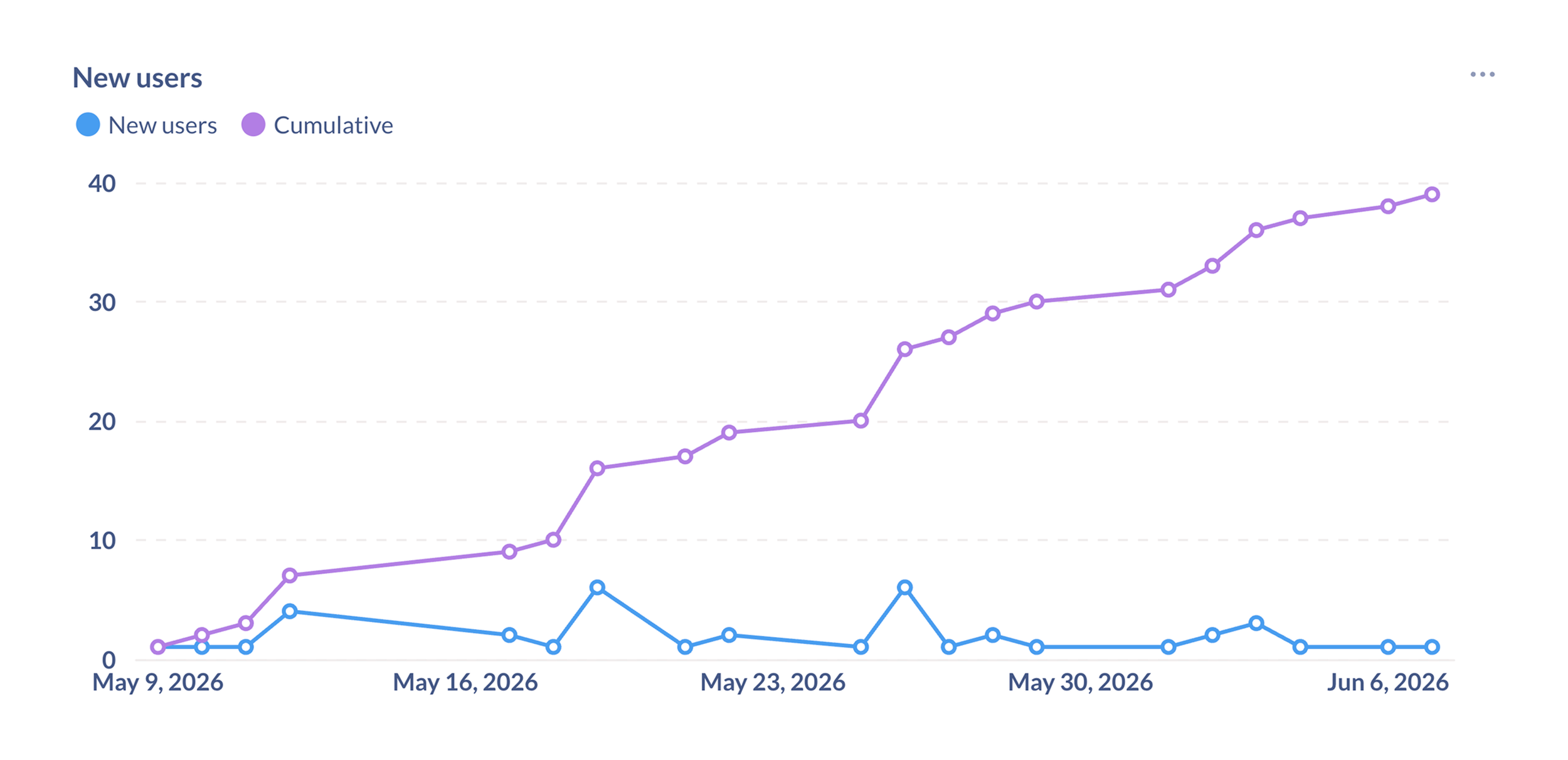
Overview of new members in coapp
The number of new members is one of the most important growth metrics for a community. It shows whether marketing efforts are effective, events are generating interest, or referrals are attracting new prospects.
At the same time, this metric should never be viewed in isolation. New members alone do not guarantee success. Long-term community value is created only when new users become active and return regularly.
Reached Unique Users: How many people are you actually reaching?
One of the most intriguing questions in community management is: How many members see the content posted in the community?
This is exactly where the "Reached Unique Users " metric comes into play. It shows how many individual people were actually reached within a specific time period. Each person is counted only once—regardless of how many posts, pages, or events they viewed.
This metric helps determine whether content is actually getting the attention it deserves. After all, even the best posts only have an impact if they’re actually seen.
Engaged Unique Users: Perhaps the Most Important Community Metric

"Reached Unique Users" metric in coapp
While reach shows how many people see content, engagement answers an even more important question: How many people actually engage with it?
The "Engaged Unique Users " metric measures the number of members who have actively interacted with the community within a specific time period. This includes, for example, comments, posts, reactions, messages, bookings, or event attendance.
For many community managers, this is the most meaningful metric of all. After all , communities thrive on engagement. They aren’t built by content alone, but by people interacting with one another. People who:
Ask questions
Sharing knowledge
Provide feedback
Attend events
Have conversations
If the number of active users continues to rise, that’s usually a very good sign of a healthy and active community.
Why Reach and Engagement Should Be Considered Together
Only by considering both reach and engagement can we realistically assess the community.
A community can reach a large number of people without generating any real interaction. Conversely, a small group of members can be very active, even though they reach only a portion of the community.
If both metrics grow in tandem, this suggests that content is not only being viewed but also perceived as relevant. It is precisely this relationship that makes community success measurable over the long term.
Example 1: High reach, low engagement
500 Unique Users Reached
25 Engaged Unique Users
Many members view the content, but only a few actively participate.
Possible causes:
The content is too one-sided
There is a lack of incentives for discussion
The members don't know each other well enough yet
Example 2: High reach, high engagement
500 Unique Users Reached
220 engaged unique users
A very positive sign. The community reaches a lot of people while also encouraging active participation.
Example 3: Low reach, high engagement
80 Unique Users Reached
45 Engaged Unique Users
The active core group is already functioning very well. The next step is to reach out to and engage more members.
Additional metrics for an active community
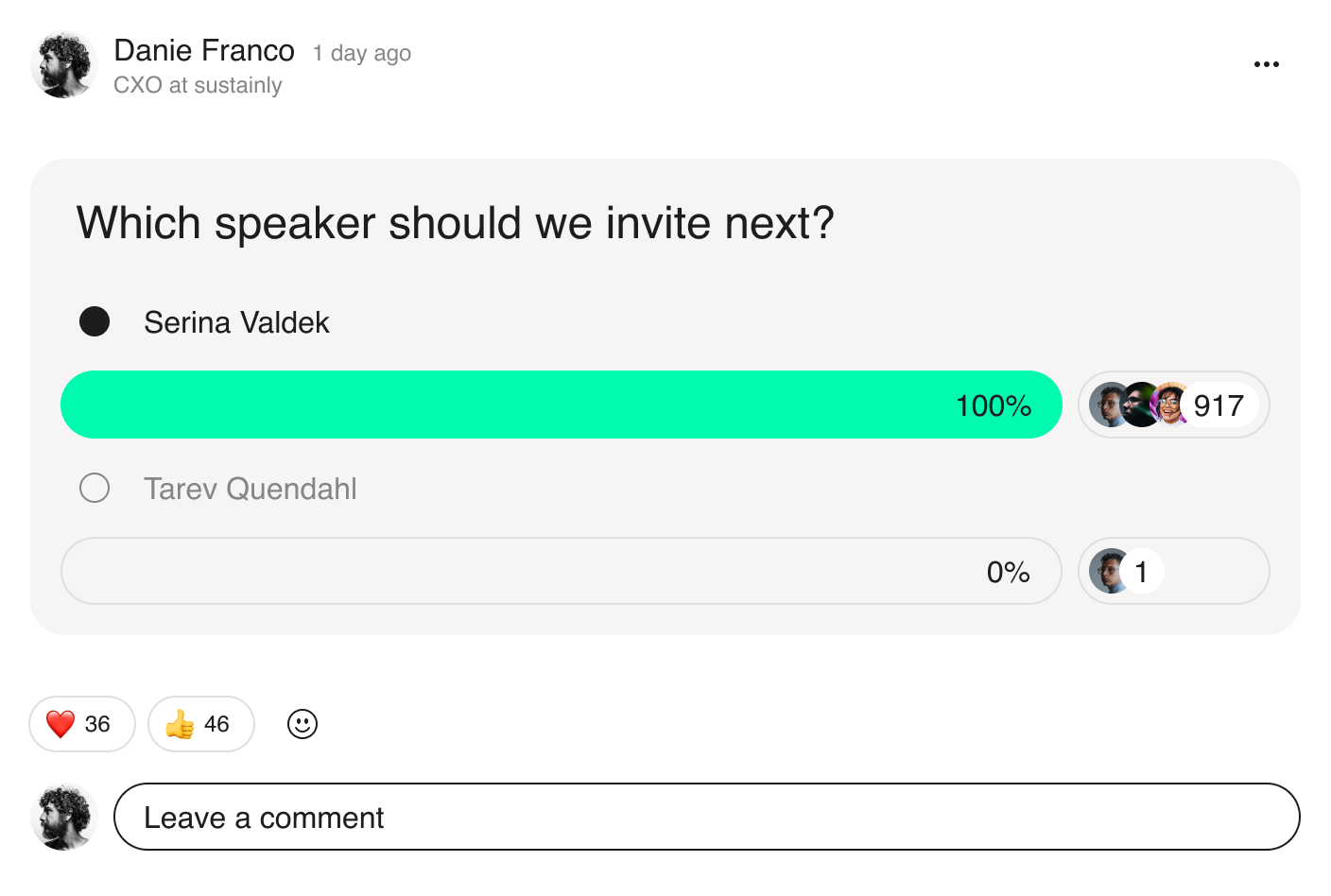
Presentation of a survey in coapp
In addition to reach and engagement, it’s also worth taking a look at the activity within the platform. The number of posts, comments, messages, or events published indicates how actively the community is being used.
In many communities, events are considered a key driver of engagement. They bring people together, encourage interaction, and often forge new connections among members.
The number of posts published shows how much content is being created within your community. However, what matters more than the sheer volume is how it changes over time.
Questions you should ask yourself:
Is content published regularly?
Are posts created only by administrators, or by members as well?
Which topics generate the most responses?
Comments are a strong indicator of genuine engagement. Many communities post content regularly but receive very few responses. A growing number of comments often points to a healthy community culture.
Direct messages indicate whether members are building relationships and interacting with one another. This is often a key indicator of success, particularly in networking, association, or club communities.
Conclusion
Successful communities don't just measure their growth. Above all, they measure how many people they reach and how many people actively participate.
While membership numbers are often the focus of attention, metrics such as " Reached Unique Users " and " Engaged Unique Users " provide far more valuable insights into the actual health of a community.
By regularly monitoring these metrics, you can quickly identify which content is effective, which strategies are yielding results, and how the community is evolving over the long term.
After all, it’s not the size of a community that determines its success—it’s the quality of the interactions among its members.